Showing posts with label Scouting. Show all posts

Thursday, April 02, 2015

What Are Your Deer Hunting Goals This Year?

© By Othmar Vohringer

Set a goal for this hunting season and then work toward it.
I asked a hunting buddy of mine that question and he replied with; “Jeez, buddy turkey hunting season just started and you already think about deer hunting.”

Well, besides being guilty of having constantly whitetail deer on my mind, even during turkey hunting season, I also happen to think that it is important to have goals in life and in hunting.

Just like having a goal in life provides you with a working guideline so does having a seasonal goal for hunting. Without a goal you won’t know what to do or how to get there. It’s a bit like driving a car without knowing where you want to go or how to get there, you end up driving in circles.

This might be okay for the hunter who’s just looking to get away from the daily grind for a bit, enjoying the great outdoors. Killing a deer is a priority but rather an added bonus. However, my guess is, since you’re reading here, you’re the type of hunter that has a passion for hunting and whitetail deer. You're  the type of hunter looking to maximize the rate of success in the deer woods. To achieve that increased success rate you have to have a goal in mind and then work toward achieving that goal.

With that established you need to set a clear goal of what it is you want out of the upcoming hunting season. I don’t know what your goal is. Maybe you want to kill your first big buck, or the first deer period, or maybe hunt a place that is not overcrowded with others hunters. Whatever your goal is for this season, no matter how big or small, you have to plan for it and you have to start rather sooner than later.

My goal for this season is to find an area with a good whitetail deer population. That might sound strange to you, but where I live is not known for abundant whitetail deer populations, it’s an area with a large mule deer population and also known for big mule deer bucks. Through research I found an area with a good whitetail deer population and a better than average trophy buck population. Now my next task is to find private landowners willing to let hunters on their property, which means spending a few days, maybe even weeks, knocking on doors. The chosen area also has vast amounts of public land. My goal is to find the public land areas that other hunters avoid. To achieve this goal I have to study maps to see what the access to these areas are. My task is to find areas where vehicle access is restricted. With restricted vehicle access chances of  encountering undisturbed hunting enjoyment and opportunity rise drastically. When all this is done I have to start scouting and chose possible stand locations.

Of course, I just could drive into the area when deer hunting season opens and see what transpires. But that is not me. I like to set myself goals and then work toward it. It increases my chances of success, and besides that, as a passionate whitetail deer hunter it is just another excuse - a worthwhile excuse – to occupy my time and my mind with whitetail deer.

What are your deer hunting goals for the 2015 season? Let’s discuss it!

Sunday, March 22, 2015

Tips For Finding Shed Antlers

© By Othmar Vohringer

Now that the weather gets warmer and the snow has melted head out in search for shed antlers. Provided you’re not a turkey hunter, shed hunting is a good way to overcome cabin fever. It’s also a good way to learn about the land you hunt, the deer that inhabit that land and enjoying the great outdoors.

However, wandering around willy-nilly hoping to stumble across a set of shed antlers will lead to noting much other than frustration.
Here are some tips on how to find shed antlers.

Scouting is to shed hunting success as important as it is to deer hunting. Study the land and the available food sources that are available to the deer in winter. Look for thick cover where bucks hide away during the harsh winter months.

In the winter and after the rut bucks form bachelor groups again, tired and nutritionally worn down form the rigors of the rut they retreat to wintering areas where they can find food and cover within close proximity. Find these hideouts and learn to identify what food sources are still available to the deer and you’re likely to find sheds from several bucks in that area.

In the winter bucks have two things on their mind. Eat and sleep. Bucks sleep, or rest, all day long to conserve energy, only getting up for short periods to feed. Bedding areas are usually found in dense cover where the bucks are somewhat sheltered from the cold winds and falling snow. During the day bucks soak up the warm rays of the winter sun on south facing hillsides and the south facing edge of forests.

While some bucks shed their antlers by trashing bush and low hanging branches, most lose their antlers through sudden movement like running and jumping, check places where deer trails cross fences, shallow creeks, ditches and other obstacles that deer have to jump over or crawl underneath.

She hunting is a slow and systematic process. Just walking around will not yield much success in finding sheds. Walk slowly and examine the ground near the features mentioned above closely, often only part of an antler will be exposed while the rest is buried under grass and forest debris.

If you want to learn more about antler shed hunting I recommend a well written book titled “A Guide To Finding White-Tailed Deer Antlers” by Joe Shead, an avid shed antler hunter for many years.


Wednesday, November 12, 2014

Getting In And Out Of Your Stand Undetected

© By Othmar Vohringer

As hunters we invest a considerable amount of time in scouting and finding features that promote deer travel, locating food sources and the perfect stand locations. Yet, few hunters pay any mind whatsoever to finding out how they will get in and out of their stand locations undetected by deer. I lost count of how many times I heard stories of hunters that got busted by deer on their way to and from their stands. It happened to me too, more often then I care to admit.

But I learned from my own mistakes and for many years now pay close attention to the routes in and out of my stands. Choosing the perfect route to access or depart your stand is just as important as finding the perfect stand location. Before hanging a stand, find out how you can access and leave without letting deer know that you’re in the area. Because if you can’t do that the best stand location will be ruined for future hunts, you might just as well pull it.

When I chose a stand location I make careful notes of where deer will be during those times that I hunt a particular stand, pre-season and careful in-season scouting will reveal these areas. If deer can hear, see or smell me on my way in or out I am done. Deer stay alive by exactly knowing what is going on all around them and who’s coming and going.

When choosing entry and exit routes we have to pay close attention to wind directions and how air currents behave in the area. That is the reason why it is so important to know your hunting area so well, not only to figure out deer movement patterns but also to figure out how you get undetected in and out. Finding the perfect stand access and departure route means that we often have to choose several routes, quite often the route we come in to the stand might not be the same we can use to leave the stand. Quite often it also means that we have to walk a considerable detour. One of my best stand locations required a boat to access and depart from it. It took me an extra half hour instead of the 15 minutes the direct route would have taken me. The extra minutes and requiring a boat was well worth the effort and time as the stand kept producing deer hunt after hunt and season after season. Seldom is the shortest and easiest way also the best way.

The next time you experience that your stand doen't come up to your expectations give it some serious consideration about how to get into and out of your stand location without alerting every deer in the vicinity to your presence.

Saturday, October 18, 2014

Early Season Deer Hunting Tips Roundup


© By Othmar Vohringer

The most common keywords used by readers of Whitetail Deer Passion over the last two weeks are; "early season deer calling", "early season deer hunting tips" and "early season deer scent".

With over 200 pages of deer hunting information on Whitetail Deer Passion it can be time consuming to find the right information at the lick of a button. To make life easier for you I did the search work for you and provide a collection of links to information about early season hunting tactics, deer calls and scent usage.

Enjoy!


There is a lot more information here on Whitetail Deer Passion about early season deer hunting, but I am convinced that the links above will provide you with a solid foundation of tips to get you started in the right direction to early season deer hunting success. 

Best of luck to you all hunting the early deer season, stay safe and keep the Whitetail Deer Passion burning. 


Wednesday, October 01, 2014

The Most Common Mistakes When Setting Up Treestands That Will Reduce Your Hunting Success

© By Othmar Vohringer

As mentioned in another column here on Whitetail Deer Passion, there is no denying that the invention of the treestand is the single biggest advantage for deer hunters. However, to use the advantages of hunting from treestands to its fullest potential we have to make sure to set them up correctly. It is here were many hunters make blunders that cost them “deerly”.

Here are some of the mistakes hunters make and how to avoid them.


Going too high

The height of the treestand from the ground is determined by the surrounding cover. If the surrounding cover is optimal at 8 feet off the ground then that is where you should hang the stand. Hang the stand any higher and you risk to be sky lighted, deer will spot you from a mile away…and no they will not come any closer to see what that bulging blob on the side of the tree is. In my humble opinion the biggest myth ever perpetrated on hunters is that philosophy of climbing high up into the tree tops to avoid deer smelling you. To avoid deer from smelling me I rely on a good shower and a set of fresh clean under and over garments before every hunt and to make sure the wind is right for the stand I am hunting, if the wind is not right I will not hunt that particular stand and go elsewhere where the wind is in my favor. Tests have shown that no matter how high you climb deer will detect your scent. The tests have shown that when you go high, around 30 to 40 feet off the ground, the air current will carry your scent maybe 100 to 150 yards before it descends to ground level. Do you believe deer that smell a hunter 100 to 150 yards away will come closer to have a look where the smell of human is exactly coming from? Neither do I! On the other hand the same tests, done with smoke cartridges placed at various heights, showed that when the stand hangs lower, around 10 to 16 feet off the ground, the scent seems to linger around the base of the tree. In that scenario with the immediate surroundings of your stand site contaminated with human scent, you still stand a chance of getting deer within shooting range, even with a bow.

Another myth perpetrated by the “climb as high as you can” advocates is that the higher you climb the less likely deer will see you. Wrong! As I stated at the beginning, if you run out of surrounding cover you will stick out like the proverbial thumb against the sky. As much advantage as treestands have, hunting from them has also educated deer to look up into the treetops for danger. In areas where hunters predominantly hunt from treestands deer always will look up first before they look ahead and around. The popularity of hunting from treestands has taught generations of deer to look up for danger. 

Hanging treestands at the wrong time

Hanging deer stands a few day or even weeks before the deer season opens is a sure recipe to spoil opening day hunting success. If you do your scouting right you should know what areas deer use on opening day, long before the deer move to that area. I hang my stands at the very least one to two months ahead of hunting season. That way the area can settle down and deer get used to the "new growth" on the tree. No matter how carful you are hanging stands it is noisy and the area is heavily contaminated with human scent. If you hunt on public land where it is not logical (stands do get stolen) or legal to hang treestands months in advance you can at the very least locate potential stand sites and do any necessary trimming and preparations. That way on opening day you can move in and carefully place your stand with low impact to the area. Having said that, I find it personally very important to practice setting up stands with the same commitment as shooting your gun or bow… and I will tell you why.

Practicing setting up stands makes it safer to use them because you're familiar with the procedure, but also there are times when a stand needs to be moved during the hunting season because deer travel patterns change. In these cases I move my stands during midday hours when the deer are resting in their bedding areas away from the travel corridors, trail intersections and feeding areas. Such stand location changes have to happen quickly and quietly. This is only possible to do if you are intimately familiar with setting up stands and that means practice and practice again until you have every move ingrained in your brain. I can take down a hang-on stand and set it up again safely in less than ten minutes. Of course, when you relocate a stand during hunting season you want to do so at the time of day when deer are bedded down.
 
Where possible a climbing treestand is much better suited for quick in season changes than a hang-on stand. To make changing stand locations quick and easy I select as many trees as I can and prepare them well before the hunting season opens. However, it must be said that climbing treestand models needing a lot of assembling are not well suited. The best models are those that only need an adjustment of the climbing cables, such as the Summit Climbers.

Ignoring the lay of the land and wind directions

The weather forecast predicts north easterly winds but don’t bet your farm on it that this holds true for your stand locations too. The topography of the land with its hills, valleys, gullies and slopes among many other features can and often do affect wind direction. In addition local thermals further affect where your scent will carry. The solution to this problem is to make sure where the wind and air currents drift. To determine that I always carry a used nasal-spray bottle filled with unscented red snap-line marking powder with me. When I squeeze the bottle I can see the red powder cloud for a long distance flowing with the breeze. This provides me with accurate information of what the wind and thermals are doing.

On that note, where ever possible I set up two stands in the same general location that way I can keep hunting by just going to the next stand when the wind or current changes. If you’re sold on scent eliminating products and clothing don’t think for a minute that deer will not smell you, because they will. I used to be fanatical about scent control, showered in scent eliminating products before every hunt, washed my clothing in scent eliminating laundry detergent, air dried and stored clothing in scent free vacuum sealing bags and wore a scent free coverall on the drive to the hunting area and used scent eliminating spray to treat my hunting gear after I left the truck, including hands head and boots. In addition I spent a fortune on scent eliminating lined camouflage garments and boots. Then one day I learned a very educational lesson that brought me back to reality about scent eliminating products. A buck came in from downwind, stuck his nose high in the air and took a deep breath, then he bolted away never to be seen again. The wind is not your friend, it is your enemy and you should always pay close attention to it.

Getting to and from your stand

How many hunters give any thought to stand entry and exit routes when they scout? My experience is that there are not many. It is a mistake that can you cost deer. It doesn’t take a degree is deer science to know that whitetails are very aware at all times what’s going on around them. The only way to outsmart the deer is to be very meticulous when scouting. Don’t just look for deer sings and a good place to hang a stand, also scout for your own entry and exit routes. The result of that consideration should be that you can enter and exit your stand site without letting the deer on what you’re doing, sometimes that means that the entry route is not the same as the exit route, or that you have to change the routes as the season goes by.

To close for comfort

Another mistake some hunters make in stand placement is that they go too close to deer feeding areas, food plots and bait. First of all it can be a very hard task to kill a deer at the feeding site and second, as studies have shown, as the season goes on deer avoid the food source more and more. No matter how careful you are in approaching or leaving the stand, eventually deer will catch on to you. The deer might not be aware of you but the minute changes and sign you leave behind each time you visit a stand site are often enough for deer to become wary and avoid the feeding area during legal shooting times. It is much better to place the stand back from the food source, preferably on intersecting trails where you will encounter much more deer traffic. Especially if you're after a buck it pays to hang the stand back from the food source. Mature bucks are notorious for hanging up in the woods and wait until nightfall before they enter the fields and food plots.

Over hunting

Hunting from the same stand every other day is a sure way to let it get “cold” in a hurry. My experience is that a stand should not be hunted more than two day per any given week, with at least two days rest in between. An old but very true saying among experienced deer hunters is; “The best chance to kill a deer from a treestand is the very first day you hunt from it.

So there you have it. I hope these tips will help you to become a better deer hunter. Feel free provide additional treestand hunting mistakes that you know or learned the hard way about it in our comment section.

Thursday, September 04, 2014

Pre-Season Hunting Tip: Stay Out Of The Woods

© By Othmar Vohringer

Here in British Columbia bowhunting season started on September 1st. In most of North America hunting season is still a month away. It never fails, a month before hunting season opens I notice a lot of hunter activity, hunters checking their trail cameras, doing last minute scouting trips, hanging or moving treestands and placing bait were permissible. In a way this activity is understandable. It’s only a month to go until hunting season and most hunters are itching to get out.

But believe me. It is the worst thing you can do. All that work you’re doing now should have been done a month ago. Now is the time to stay out of the woods. Any activity you do now only serves one purpose putting the deer on edge. Think like a deer. All year it is quiet in the woods, then a month before hunting season human activity increases a hundredfold, all this does is make the deer alert.

If you did your due diligence during the spring and summer scouting you know what trails the deer use at any given time during the hunting season and you have placed your stands accordingly. If you didn’t do that then it is too late now.

A month before the season let the deer relax and resume their normal travel and feeding patterns. The day hunting season opens is the day you go into the hunting area and sit on your stand. This is the best chance you will get at opening day hunting success. Conversely running around in the woods now checking cameras, hanging stands and scout will diminish your chance at an opening day buck.

Monday, October 29, 2012

Watch Out For Deer Crossing Road Signs

 © By Othmar Vohringer

Hunting Tip Of the Week:

Deer crossing signs alert drivers to be careful of deer crossing the street. Usually such signs are posted where over the years several deer/vehicle accidents have occurred.

For hunters these sign have an additional meaning. It means that the stretches of road where such signs are set up are traditional deer travel corridors. Such places are a good starting point to look what’s on either side of the road that makes the deer cross on that particular place. It is not uncommon to find some type of food source and structure that are hot deer magnets.

Before you run off and start scouting make sure it is not private land, if it is, get permission before you set foot onto the property. Over the years I had good luck discovering deer hunting hotspots by starting to scout at deer crossing road signs. While some of these traditional deer crossings are active all year others may just be used by the deer at specific times of the year. In any case, the areas near a deer crossing road sign are always worth a closer look.

Sunday, September 23, 2012

Whitetail Deer Hunting Tactics: Read All About It

© Othmar Vohringer

Common belief has it that outdoor writers are the lucky ones because they can spend all their time in the great outdoors. While I admit that I call myself “lucky” I do not spend all my time outdoors. A good part of my time as an outdoor writer is used up in my office writing about the outdoors. Proof of that are my new articles published this fall in the BC Outdoors and western Sportsman magazine, available on the newsstands now.

Western Sportsman magazine. September/October 2012: Beat Them To It. On page 69 I reveal seven of my favourite early season deer hunting tactics that may help you too to get an early season buck this year. Here is a teaser.
Hunt Escape Routes.
For most hunters there is nothing worse than having to share the same area with hordes of other hunters. In fact, dealing with all the other hunters used to be the reason why I rarely went out in the early season. Not anymore! I learned how to use the other hunters as my involuntary deer drivers. When hunting highly pressured areas I forget about scouting for deer sign. Instead, I scout for other hunters and the sign they leave behind. Given the habitual human nature the hunters will do the same things again this season. Try to find trail markers hunters have left behind (they always do), stand locations and easy walking and driving access routes to the area.

Monday, July 04, 2011

Start Your Deer Scouting Now

© By Othmar Vohringer

The summer just started, well here in BC it did, and that is about the time where I start to drive along the field edges in the evening to look for deer. I am not interested yet in figuring out travel patterns. It’s to early for that. Deer hunting season is still a few months away and deer will have changed their patterns by then. But it is a good time to start a deer inventory of sorts. The bucks start to grow their antlers and most fawns are born.

Armed with a camera, binoculars and a notepad I check how many does, fawns and bucks are in the fields. I make careful notes of the time the does and fawns enter the field in the evening and at what time the bucks come out. I make notes about how many deer I see and how many of them are does, fawns and bucks. I also write down the size and age of the bucks, from what direction they enter the field and in which direction they leave.

This observations give me a pretty good idea how many deer there are in my area, what the sex and age structure is, it's a good starting point to go by when the serious scouting begins in about another month. By the beginning of August my scouting for the early season will be done and the stands are in place.

###

This blog post has been brought to you by Othmar Vohringer Outdoors

Talk about this and other hunting topics on the Othmar Vohringer Outdoors Forum

Sunday, February 27, 2011

Timing The Whitetail Deer Rut

© By Othmar Vohringer

“When does the whitetail deer rut occur?” This is the most frequently asked question wherever I talk to hunters. In a previous article, Understanding the rut, I explained what the different phases of the rut and the triggers for that event. No other subject of whitetail deer hunting is as controversial and myth laden as the rut.

Here at Whitetail Deer Passion I always try to use the latest scientific research combined with my own field observations and a good helping of commonsense to provide information about this controversial subject. As I stated many times before, when it comes to whitetail deer behaviour nothing is written in stone. What was scientific fact a few years ago has been proven wrong while others remained fact to this day. Add to this old school thinking and beliefs that have been passed on through generations and it can become quite an opinionated discussion at times.

Sunday, January 23, 2011

Post-Season Scouting: Scout Now For Next Hunting Season

© By Othmar Vohringer

Winter is a bleak time for many hunters. Deer hunting seasons are closed for most of North America and the hunters sit in the camp until spring. However, there is no better time to scout than right after the season closes and during the winter.

You may ask what benefits scouting now will provide six or seven months from now? Let me tell you. One of the biggest benefits is that you do not have to worry about spooking deer. With all the leaves of off the trees and the vegetation died down makes the landscape, trails and other deer sign plainly visible, where you couldn’t see 20 yards in the fall.

Thursday, August 13, 2009

Public land hunting tip

© By Othmar Vohringer

I have often heard “There are no big bucks on public land”. Nothing could be further from the truth then that statement. Just because you don’t see any big bucks during hunting season doesn’t mean that they are not there. The bucks are there you just have to find them.

In order to find the big bucks forget scouting as you normally would. Instead scout for other hunters and what they do. Learn as much as possible about the other hunters habits, where they park their trucks, what routes they take to their stands, where they place the stands and finally what times they are coming and going.

Write your findings down on an aerial or topographical map and you soon will see a pattern appearing on the map. There will be areas that are absolutely void of any hunter presence and these are most likely the places bucks will go when the hunting pressure starts to build up. To get to these places deer use escape routes. Check these hunter free islands out and then determine on hand of the topography, availability of cover and the structure of the land how the deer get to these hunter free islands.

Come opening day you should have found several escape routes that the deer use to evade hunters. Set up stands along these escape routes that get you within easy bow range of deer. Then on opening morning be in your stand long before every other hunter arrives. Sit quietly in your stand and be prepared to see action as soon as the other hunters enter the woods.

Scouting for other hunters on public land has been so successful for my hunting that I never bother anymore trying to figure out what the deer are doing. I concentrate all my efforts on the other hunters and how I can use their movements to funnel deer past my stand. People are creatures of habit, doing the same things over and over again, so this tactic works any time of the season and anywhere.

I’ve arrowed my biggest public land buck, a respectable nine point, in a Illinois State Park just 40 yards next to a hunter parking lot in a thick bramble bush where no sane hunter ever would look. I discovered the buck hideout returning to my truck after another morning seeing nothing but squirrels from my treestand and loosing all hope of ever killing a buck on public land. It had snowed a bit all morning and on returning to my truck I noticed fresh deer tracks going between the parked trucks and leading into the thicket. These tracks had not been there when I arrived shortly before daylight. I followed the tracks, found the hideout and set up a stand. Three days later I went back to that stand and the rest is history as they say. That was almost 19 years ago.

Since that day I have become fond of public land hunting and outsmarting other hunters. I enjoy the look on the face of other hunters when I drag a deer out of the woods where it was believed they don’t exist.

Sunday, August 09, 2009

Early Season Scouting

© By Othmar Vohringer

The early season can be a very though time to kill a big buck. The vegetation is lush which makes deer hard to see and food is plentiful. To find the perfect early season stand location a hunter has to consider what I refer to as the four factors of scouting. These factors are the building blocks for proper early season scouting.

The beauty is ones a hunter understands what the four factors are he can apply these anywhere and anytime during the deer hunting season and predict the best ambush locations for deer long before the deer use a given area. The four factors are; Food, Cover, Terrain and Structure. It is these factors that determine deer movement at any time during the season. A good hunter understands these factors and how they relate to each other.

I have written an article in which I explain the four factors and how they dictate deer movement patterns. Read the article and I guarantee that it will improve your early season scouting efforts.

Learn more about my widely acclaimed line of deer hunting seminars or our deer hunting courses.

Othmar Vohringer Outdoors
Founding Member of Outdoor Bloggers Summit

Saturday, August 12, 2006

Signpost Communication

In this article we will look at the different signs deer make and there meaning. In general signpost communication is both, a visual and olfactory marker for other deer. Signposts include both rubs and scrapes. The deer uses these signposts to either, convey a message to other deer or as an orientation marker, similar to directional signposting we use on our roads. A smart hunter will learn how to interpret and understand deer sign. Understanding deer sign is as important to a successful hunter as understanding a deer’s behavior in correlation to food sources, topography, seasonal and environmental changes.

Scrapes
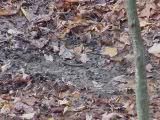
A scrape is an area of exposed earth up to 6 or 8 feet in diameter that a deer has swept clear of leaves, twigs and other debris with its front feet. Deer leave their scent at scrapes in several different manners. They urinate in it and as they step it in leave glandular scent behind. Despite popular believe that only bucks make and use scrapes, does make and use scrapes too. One way to view a scrape is that it is a check in station. Deer passing through the area will check in or visit the scrape to leave their scent (urine) and see what other deer have recently been in the area. Both bucks and does will visit active scrapes. There are several kinds of scrapes.

Primary Scrape
A large scrape made in an area that does frequent or where several doe trails converge. A buck will often urinate in these scrapes and leave other glandular scents in the area. These scrapes could be described as boundary signposts. For hunting purposes these scrapes are not much use to me other than that they tell me that this area holds a dominant buck.

Satellite Scrape
A scrape made by a mature buck along edge cover or buck travel corridors. Some hunters believe that these secondary scrapes are used mostly by the buck population to keep track of each other. However, I have witnessed many times that does too urinate in these scrapes to “advertise” their estrus status to passing bucks. Several satellite scrapes along an edge are called a scrape line. Generally, I do not hunt scrapes but they do tell me by increased activity (scraping) when the rut is approaching.
Primary and Satellite scrapes are always placed on edges and in plain sight, they are meant to be very visible. These scrapes can always be next to a tree trunk or bush with an overhanging branch or two about four feet of the ground. Typically the branch above the scrape will be chewed on by the deer to leave yet another scent marks. In addition bucks will rub their heads on these braches and by doing so deposit glandular scent on the branches.
The scrapes can appear from the size of a dinner plate to several feet in diameter. The size of the scrape is no indication of the size of the buck that made the scrape.

Random Scrape
A scrape made randomly by a buck along a trail. These secondary scrapes feature not always a overhead licking branch. Most hunters believe that most satellite scrapes are made by immature bucks and are never revisited by the deer that made the scrape or any other deer. Such scrapes are, also made by large bucks in the pre-rut out of frustration. The pre-rut is a very tense time for bucks when they start to become more aggressive and intolerant of each other, the does are not in estrus yet and so bucks let off some steam by making these “frustration” scrapes and trash their horns against brush and saplings. Again, for hunting proposes these scrapes are of no value to me other than that they tell me that there are bucks in the area.

Mock Scrape
A mock scrape is one that has been made by a hunter in an area that deer frequent. Some hunters will visit mock scrapes year around and freshen them with commercial deer scent. The purpose of a mock scrape is to create a signpost that brings deer closer to your stand location and give the resident bucks the impression that another buck invaded their territory. By making a mock scrape the hunter has to pay attention to deer travel. It makes no sense to try and attract a buck with a mock scrape in an area where he doesn’t travel. No deer will go out of its travel way to come to a scrape.

Active Scrape
An active scrape is one that is being regularly maintained by multiple deer. A scrape that is not regularly visited is referred to as an in-active scrape. An active scrape has fresh turned soil and is free of debris such as leafs and twigs and it has a strong smell of urine. When a hunter approaches a scrape to “juice” it up with deer urine based scent he should use utmost caution not to leave any human odors near the scrape. Most hunters use rubber cloves to handle scrapes and make sure that they do not step into the actual scrape.

Rubs
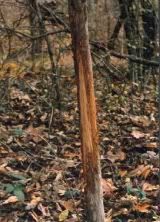
A rub is an area on a tree 1 to 3 feet off the ground where a buck has rubbed the bark off the tree by using it to remove the velvet, polish his antlers and strengthen his neck muscles. It is often said that all bucks rub little trees, but only big bucks rub big trees, however I have made no observations to support such claims. I have seen small bucks rubbing on large trees too. One basic rule should be applied to rubs. While a big buck can make small and large rubs, a small buck only makes small rubs. In my opinion, there are only three types of rubs; incidental, cluster and sign post rubs.

Incidental Rubs
Incidental are just as the name implies. Incidental. They mean nothing and have no value for our scouting purpose. Incidental rubs appear early in the season and are numerous. They are not large and appear either as singles or in groups of three to four. Some hunters make the mistake of believing that these rubs are made by bucks to remove the velvet from their antlers. However, after my observations I believe this is not true. To be honest with you I have no clue as to why bucks make this rubs. Perhaps they make them to relive some the tension and aggression as bachelor groups begin to dissolve and bucks begin to test their strength on each other and get ready for the coming of the rutting phase. What ever it is I do know that these rubs are of no value to me in planning my hunting strategy.

Cluster Rubs
I do not know or this is the proper name but that is what I call these rubs because they appear in clusters. There may be as many as a dozen or more of them in one small area and always in clusters. They may vary in size from a small sapling to a thigh-sized tree. These rubs provide me with slightly more information than the incidental rubs. In fact, I am convinced that these cluster rubs are made by more than just one buck. Because of that they are an indication that the area is frequented by more than just one buck. These areas therefore deserve some consideration as possible stand sites. My observation has been that such cluster rubs seem to appear more in areas with regular to heavy doe traffic. You find them often near or around doe feeding and bedding areas and that is what makes these rubs interesting for me. Make no mistake about it. Come the rutting season these bucks that made this rubs will all hang around by the girls. I have always maintained, if you want to kill a big buck stay with the does because the big boys will too.

Sign Post Rubs
These are the rubs I am looking for and that in my opinion have the highest value in terms of placing my stand or patterning a buck. These rubs are exactly what the name implies – sign posts. This rubs convey information, not only to the bucks, but also to the woods savvy hunter. These rubs are like street signs for us. Like a stop sign that tells us to stop or a warning sign tells us of a dangerous situation ahead. The sign post rub tells the buck the same thing. It provides him with information. If we as hunters can interpret that information correctly, we can plan a strategy that ultimately could bring a buck right close up to us.
It may not be evident immediately what a sign post rub means, it often takes some real detective work to figure that out. Let me give you an easy explanation of how they work. You need to understand why a buck needs these sign posts and does do not. Does travel in large family groups during most of the year. These social groups create large and good visible trails. The does easily can follow these trails, even at night, they also know exactly where each of these trails leads too. It’s a bit like with you and me, we know our way from our home to the next grocery store or to our place of work even if all the road signs would be removed from that route.
Bucks, on the other hand, spend the most important part of the year as loners, or in the company of a single subordinate buck. Buck trails are insignificant if they can be seen at all. Bucks travel a great deal and often cross into strange and unfamiliar territory in the search of receptive does or new territory. As with us humans, if we go some place we are unfamiliar with we need to relay on a road map and signs. It’s no different with bucks and it is here where the sign post rub guides the bucks.
Sign post rubs are usually large and good visible, they are also regularly freshened up during the fall moths and may be used by more than one buck.
By far the easiest rub to understand is the crossing point rub. Look for such rubs near crossings such as along roadsides, fence lines, streams, field edges and other edges. These rubs tell the bucks, “Here is a crossing”. It is also common to find a line of rubs, “rub line” leading to these sign posts. Often there is no or only a very faint trail leading to such a sign post rub or along a rub line. Single bucks do not make large trails. However, if you look a little bit around in the area, preferably upwind from the signpost rubs, you will discover in many instances a significant doe trail.
A sign post rub can tell us much more than just where a given buck may travel or cross a certain point. Such rubs also can tell you from which direction a buck approaches and where he’s heading, even the time of day and frequency of travel.
The bucks always rub the tree on the say of the direction they come from. The marred side of the tree points to the tail end of the buck. If you are facing the rubbed side of a tree you are facing in the direction the buck is going. If you follow the direction and keep your eyes peeled you may see other rubs in a line. This line has not necessary to be straight. During the pre-season scouting follow this rub lines and knowing where these lead too will let you determine at what time of the day the bucks most likely travel this route. If a rub leads to a feeding area it is likely that the buck travels this rub line in the late afternoon. A rub line running along a ridge top may most likely be a midday travel route when the buck searches for does in heat.

Deer Tracks
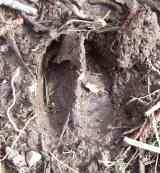
The size of a deer track will help you to determine the size of the deer. As a deer grows, their feet will grow accordingly. Big mature bucks will leave big and deep tracks. In soft ground the dewclaws will show on both bucks and does. Rounded tips on hoofs are a result of hoof wear usually due to rocky or other abrasive surfaces and have little to do with weather the deer is a buck or a doe.

When a deer walks, they will place their back hoof in the track of their front hoof. If the second track falls slightly to the outside of the first, it is probably a doe because a doe's hindquarters are wider than her chest. The wider hindquarters of a doe are required for giving birth. If the second track falls slightly to the inside and short of the first track, then it is probably a buck track since a buck's chest is wider than his hindquarters and his body is longer.

Deer Trails
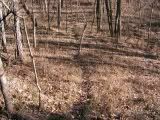
Think of deer trails like of our highway system. Deer trails are always coming from somewhere and going somewhere. Deer trails lead to food sources, water, bedding areas or connecting with other trails. Some trails can be as wide as a walkway while others are so faint that you can barely see them. Deer do not use all the trails at will whenever they want, there has to be a purpose for the deer to use any given trail. During the year deer use different trails at different times and for different purposes. To find out which trails the deer will use during different times in a hunting season and to plan hunting strategies that work the hunter has to find out which trails will be used by the deer at the time he hunts. What trails the deer will be using at any given time has to be determined by finding out what’s on either end of the trail or what they are connected to.

Deer Droppings
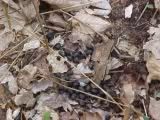
Deer droppings don’t tell me much, other than that at one time or other a deer walked here. There are only two incidents when I get exited about droppings. One is when I find fresh deer droppings plus other fresh sign that tells me that this is an active area full of deer that I need to hunt here right now. But as I said, there has to be other sign indicating that the deer are using the area, deer droppings alone don’t excite me at all. The second occasion is in the late season when I track deer in the snow with my bow or muzzleloader. Seeing fresh deer droppings, perhaps still steaming, puts me on high alert. This could mean that the deer is only a short distance ahead of me.

In future articles we will look a bit closer at different deer sign and how I use these signs to plan my hunting strategies.

If you have any questions or comments about this article please use the comment feature below.

Sunday, July 30, 2006

Scouting, Do It Right!

Here is a question about deer scouting a young novice hunter asked recently on one of the hunting forums. This question is followed by three typical standard answers.

Question:
"When do you usually start to scout out places for the upcoming deer season?" (This was asked in June.)

Answer #1.
"Now.........no really, I'm not joking...if you can find spots with lots of good feed and access to water right now, there will likely be deer around when the season starts."

Answer #2.
"I start when season opens, then if you see a good one (buck) you can blast em! I’d rather spend more time in the bush when the season is open, rather than when the season is not open."

Answer #3.
"If you want to be successful in the hunting season you should scout all year long and be out in the woods every opportunity you get."

I am not surprised to read such answers. It’s more or less the same I hear whenever and wherever I talk to hunters. There are those who believe you should spend every waking minute in the deer woods. On the extreme opposite of the scale are those who think that stomping trough the woods a few days before the season opens and hanging a stand is all that’s needed.

I can tell you that much in advance. All three answers are wrong and will actually thward your sucess to kill a buck, or any deer for that matter.

Scouting is perhaps the most important part of hunting. In fact I believe that scouting is the actual hunt. If you do it right then all you have to do is to be at the right time and the right place and shoot a buck. Well, not quit, there are many variables that will cause deer to change their travel patterns an behavior, and they do so sometimes over night.

Because scouting is so important and because there are many myth about this subject but also because I get asked more questions about scouting then about anything else hunting related, I have decided to start a series here on the Whitetail Deer Passion Blog about scouting.

By the time all the future scouting articles are added here you will know everything there is to know about scouting. But make no mistake about it. You can read all there is to read about this subject but it still will be no substitute to actually be out in the nature studying the game animal – in this case deer – you intend to hunt. All successful hunters have one thing in common. They all know the animal they hunt and the habitat that animal calls home. Successful hunters learn, study and want to know what triggers certain behaviors and why. In short they know their quarry as well as they know themselves.

So if you want to become a master scout which will lead you to becoming a successful hunter then stay tuned here and keep checking this space for added links to: Scouting, Do It Right!

Read more articles about scouting.
A Year in a Whitetail Deer's Life
Field Aging Bucks
Signpost Communication
Related Posts Plugin for WordPress, Blogger...