© By Othmar Vohringer
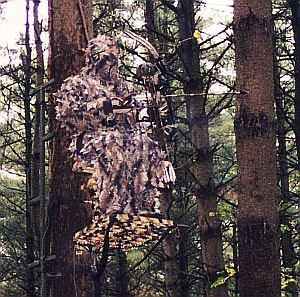
It’s already June again, and with that said it is time to think of the upcoming hunting season. This time around I start to think about treestand locations. The bow hunting season begins here on the first day of September and I always try to have all my stands up by late July.
I did all my preliminary scouting after the hunting season closed last year and fine tune it in the spring into early summer. With that said, I already know where to hang my treestands or build natural ground blinds. I am often asked. What are the factors of a perfect stand location?
Hunting deer with a firearm I can set up stands almost anywhere within the radius of active deer movement, provided I have clear shooting lanes. Where attention to detail in stand location and placement can break or make your hunting is during bowhunting season. In order to get close to deer and stay undetected we have to be very aware of every little detail in choosing stand locations and setting up stands. As often is the case the devil is in the details.
These are the factors that I consider imperative for a successful stand setup.
Scouting:
I am continually surprised how many hunters head to the woods a few weeks before deer season opens and hang a stand at the first tree next to a trail with fresh tracks. Doing this you jeopardize any hunting success and have to rely entirely on luck to fill your tag. A wise hunter once said; hunting success is the result of 80 percent scouting and 20 percent luck. If you do not scout, or scout incorrectly, your success is dependent entirely on luck. Over the years I wrote several magazine articles dedicated to scouting. I encourage you to read the linked articles below and apply the advice.
Scouting For Hunting Success
Mapping Out Deer Hunting Success
Enter and Exit Routes:
The best stand location is rendered useless if you can’t access or depart the location without alerting deer in the vicinity. And before you say “I don’t have to worry about deer detecting because I wear scent eliminating hunting garments and boots”. Let me tell you that deer WILL detect you coming or going if your bath to or from the stand crosses deer holding areas. Deer are perfectly attuned to everything that goes on around them. The best way to avoid letting deer on to your presence is choose entry and exit routes carefully. Depending on the stand location you may have to choose a different exit route from the one you enter the stand. Proper scouting will reveal what exit and access routes you have to choose.
Treestand Height and Cover:
A lot has been written and said about how high a treestand should be placed on a tree. There is still a considerable number of hunters believing that the higher you can go the better. This simply is not true. I told that story bevor but it is worth repeating. A few years ago on my walk to one of my stands I spotted a large black spot about 50 feet off the ground on a pine tree trunk from a distance of about 400 yards. Using by binoculars the large black spot turned out to be a hunter in a treestand. If I could see that dark spot high up on a tree trunk then so could the deer. It is a myth that hunting from a stand placed high up on a tree will prevent deer from smelling you. I covered that myth and other treestand placement mistakes in, “The most common mistakes when setting up treestands".
The height of the treestand is determined by the cover around you. As a bowhunter it is important to stay in cover as much as possible, to achieve that we have to make use of the natural cover around us. When I have chosen a tree for my stand I will check from the distance where I expect deer to approach my stand location at what height off the ground the best cover is available. By looking up the tree I can see where the background cover is to my satisfaction and that is the height were my stand will be placed, be that 8 feet or 20 feet off the ground. Neglect cover in placing your stand and you will be detected by deer. Treestands have given hunters, especially bowhunters, a huge advantage. The downside of treestands is that this popular hunting method has educated deer to look up to the treetops for danger.
Wind:
Wind is a constant consideration of mine in placing a treestand. I place stands in such a way that the prevailing wind carries my scent into an open space not frequented by deer or backed up against steep ravine, river, lake or other obstruction that deer avoid or can’t cross without passing by my stand first before they get a whiff of me.
Shooting Lanes:
As important as all the above is, you need shooting lanes. This can be a bit tricky at times. The trick is to cut enough shooting lanes that get at least two or three clear lanes to shoot at deer from every direction you expect deer to travel past your stand. You want to be very mindful of not overcutting shooting lanes to the point that you lose cover. Here it pays to know the trajectory of your arrows as they make their way to the target. Diligent target practice at different distances will make you familiar with your arrows fight path. Typically I trim shooting lanes at the very least a month or even two before hunting season opens.
Silence is Golden:
If you do everything right it will be no good if your stand pops and creaks every time you move. Silence is golden. To keep a stand quiet use a quality product and maintain it regularly. After each hunting season I check my stands for worn parts and lube all moving parts like platform and seat hinges with unscented lubricant paste. In addition I cover the treestand bow-holder with moleskin to prevent metal to metal sounds.
Comfort:
And finally, never underestimate comfort. An uncomfortable treestand, no matter how well it is placed, will end in misery. More than anything else uncomfortable tresstands are the result why hunters leave to early. You can improve the level of comfort by adding an extra cushion on the seat and as a backrest onto the tree trunk. Additional measures to improve comfort are cutting off and branch knots on the tree trunk to avoid being pocked in the back and adding a foot rest to standing platform. In short take whatever steps that is necessary to accommodate your level of comfort for many hours of sitting still.
In addition the tips provided here I would like to direct your attention to two articles relating to the topic covered here.
Choosing the right treestand for the perfect ambush
Treestand hunting essentials
Showing posts with label Hunting Tactics - Archery. Show all posts
Tuesday, June 02, 2015
Saturday, October 18, 2014
Early Season Deer Hunting Tips Roundup
© By Othmar Vohringer
The most common keywords used by readers of Whitetail Deer Passion over the last two weeks are; "early season deer calling", "early season deer hunting tips" and "early season deer scent".
With over 200 pages of deer hunting information on Whitetail Deer Passion it can be time consuming to find the right information at the lick of a button. To make life easier for you I did the search work for you and provide a collection of links to information about early season hunting tactics, deer calls and scent usage.
Enjoy!
There is a lot more information here on Whitetail Deer Passion about early season deer hunting, but I am convinced that the links above will provide you with a solid foundation of tips to get you started in the right direction to early season deer hunting success.
Best of luck to you all hunting the early deer season, stay safe and keep the Whitetail Deer Passion burning.
Labels:
About Whitetail Deer,
Equipment Tips,
Hunting Tactics,
Hunting Tactics - Archery,
Scouting,
Smart Hunting Strategy,
Tip of the Week
Wednesday, September 24, 2014
Hunting Whitetail Deer From The Ground
© By Othmar Vohringer
There is no denying it, the popular and most effective way to hunt whitetail is from treestands and will most likely remain so in the future. Another method that enjoys a growing popularity, especially with the aging generation of deer hunters, are pop-up blinds. These blinds can be set up quickly with little fuss and are easy and light to transport. Some of the better quality pop-up blinds not only conceal the hunter they also provide shelter from wind and rain since they are, to a degree, waterproof. For many eastern hunters the pursuit of whitetail deer from the ground must seem something only a crazy person would attempt. Granted hunting bucks at eye-level can be extremely difficult, but with a little planning and relearning it is absolutely possible.
Before I moved to British Columbia I did all my deer hunting from treestands, and while I still hunt a fair amount of my time in the woods from stands I have adopted the “western way of hunting” with a great measure of success. Hunting from the ground is “how hunters roll in the west” and it rubbed off on me.
As mentioned above when you hunt from the ground it requires a different set of skills to find a proper ambush site. It is here where good scouting skills pay huge divides. Instead of treestands and pop-up blinds I use the available topography and natural material, such as branches, tall grass and dead-fallen trees as a natural blind. The good thing about natural blinds is that they are very quickly constructed, you do not have to haul them around and they always fit into the existing landscape, unlike many pop-up blinds that need additional camouflaging and have to be set up before hunting season to give the deer time to get used to it. When I hunt deer at eye-level all I carry with me as additional gear is a lightweight stool, a pair of branch clippers and a small folding saw. The stool provides me with comfort and with the aid of the clippers and folding saw I can turn any spot within seconds into a formidable ground blind and no deer will pay any attention to it. More often than not I do not need to make any alterations whatsoever, sitting behind a bush, a clump of tall grass, a thick tree trunk or a dead-fall tree will suffice. Nature is full of hiding places for hunters. You just have to learn to recognize them.
Mobility
Hunting from the ground, without a stand or commercial blind makes me extremely mobile. I am able to set up everywhere I want to and be ready to hunt in less than a minute without having to look for a suitable tree to accommodate my stand or a sport for the pop-up blind . If the wind is right I can hunt right away and if the wind changes on me I can get up a leave in a second and find a spot nearby that is perfect. Mobility also reduces the chances of deer catching on to you, which is what often happens when you hunt the same stand or blind several times.
Camouflage
When hunting on the ground camouflage becomes really important. Good camouflage does not only break the human outline up but lets you get away with slight movement that you need to shoulder your rifle or pull the bowstring back. The best camouflage I found that works perfectly for that type of hunting is the 3-D leafy suit from ASAT. There are many different brands on the market but in my opinion ASAT beats them all. I also found Predator Camouflage to be very useful and consequently wear almost exclusively ASAT and Predator camouflage for over 15 years now.
If you look for camouflage made for hunters, not "outdoor athletes", check out the Day One Camouflage company. This is a great company that makes top quality garments in many different camouflage patters to an affordable price and provides excellent costumer service.
There is no denying it, the popular and most effective way to hunt whitetail is from treestands and will most likely remain so in the future. Another method that enjoys a growing popularity, especially with the aging generation of deer hunters, are pop-up blinds. These blinds can be set up quickly with little fuss and are easy and light to transport. Some of the better quality pop-up blinds not only conceal the hunter they also provide shelter from wind and rain since they are, to a degree, waterproof. For many eastern hunters the pursuit of whitetail deer from the ground must seem something only a crazy person would attempt. Granted hunting bucks at eye-level can be extremely difficult, but with a little planning and relearning it is absolutely possible.
Before I moved to British Columbia I did all my deer hunting from treestands, and while I still hunt a fair amount of my time in the woods from stands I have adopted the “western way of hunting” with a great measure of success. Hunting from the ground is “how hunters roll in the west” and it rubbed off on me.
As mentioned above when you hunt from the ground it requires a different set of skills to find a proper ambush site. It is here where good scouting skills pay huge divides. Instead of treestands and pop-up blinds I use the available topography and natural material, such as branches, tall grass and dead-fallen trees as a natural blind. The good thing about natural blinds is that they are very quickly constructed, you do not have to haul them around and they always fit into the existing landscape, unlike many pop-up blinds that need additional camouflaging and have to be set up before hunting season to give the deer time to get used to it. When I hunt deer at eye-level all I carry with me as additional gear is a lightweight stool, a pair of branch clippers and a small folding saw. The stool provides me with comfort and with the aid of the clippers and folding saw I can turn any spot within seconds into a formidable ground blind and no deer will pay any attention to it. More often than not I do not need to make any alterations whatsoever, sitting behind a bush, a clump of tall grass, a thick tree trunk or a dead-fall tree will suffice. Nature is full of hiding places for hunters. You just have to learn to recognize them.
Mobility
Hunting from the ground, without a stand or commercial blind makes me extremely mobile. I am able to set up everywhere I want to and be ready to hunt in less than a minute without having to look for a suitable tree to accommodate my stand or a sport for the pop-up blind . If the wind is right I can hunt right away and if the wind changes on me I can get up a leave in a second and find a spot nearby that is perfect. Mobility also reduces the chances of deer catching on to you, which is what often happens when you hunt the same stand or blind several times.
Camouflage
When hunting on the ground camouflage becomes really important. Good camouflage does not only break the human outline up but lets you get away with slight movement that you need to shoulder your rifle or pull the bowstring back. The best camouflage I found that works perfectly for that type of hunting is the 3-D leafy suit from ASAT. There are many different brands on the market but in my opinion ASAT beats them all. I also found Predator Camouflage to be very useful and consequently wear almost exclusively ASAT and Predator camouflage for over 15 years now.
If you look for camouflage made for hunters, not "outdoor athletes", check out the Day One Camouflage company. This is a great company that makes top quality garments in many different camouflage patters to an affordable price and provides excellent costumer service.
Friday, July 08, 2011
Bowhunting Stand Locations You Should Avoid
© By Othmar Vohringer
There are any number of features that just scream, “Hang a stand here.” But some of these spots are traps that you should avoid. Here are a few examples of such hot spots that turn out to be traps.
Ravine Crossings
This tempting location probably claims more victims than nearly all the others combined. Even experienced hunters can fall for its raw appeal of a ravine.
Here's why these are traps: Funnels between two bedding areas are always good choices to place a stand but not all funnels are the same and the ravine is one of them. At first glance it appears to be a great funnel between two bedding areas, made even better by the fact that you can sneak up the ditch to get to the stand. Deer will never know what hit them.
Be aware you've just stepped into the snare that's going to make you miserable and ruin what could have been a great area. What's going to happen when the wind blows? Your scent is going to wash all over that ravine until every deer within a quarter-mile radius knows you're there. Ravines are not very predictable in wind directions. Often these spots are prone to switching wind directions and swirling air currents.
Easy Stand Location
Most of us prefer a stand location that's easy to travel to, over one that requires a GPS, and maps to find. Some hunters are comforted when they get out of bed in the morning knowing they almost can drive up to the stand location or only have to walk a short distance. Yes such easy to reach locations can be good spots too, but in most cases it’s what every other hunter does too and you pay the price for it.
When I chose a stand location I look for places where I do not have to walk through areas that hold deer, like an open crop field, and where every other hunter might set their stands up to. My stands are always placed further back from the feeding and bedding areas on trail intersections and away from every other hunter.
Don't fall victim to the temptation to choose a stand site because it permits you easy access. Look for a stand that gives you several approach routes without walking through deer holding areas.
There are any number of features that just scream, “Hang a stand here.” But some of these spots are traps that you should avoid. Here are a few examples of such hot spots that turn out to be traps.
Ravine Crossings
This tempting location probably claims more victims than nearly all the others combined. Even experienced hunters can fall for its raw appeal of a ravine.
Here's why these are traps: Funnels between two bedding areas are always good choices to place a stand but not all funnels are the same and the ravine is one of them. At first glance it appears to be a great funnel between two bedding areas, made even better by the fact that you can sneak up the ditch to get to the stand. Deer will never know what hit them.
Be aware you've just stepped into the snare that's going to make you miserable and ruin what could have been a great area. What's going to happen when the wind blows? Your scent is going to wash all over that ravine until every deer within a quarter-mile radius knows you're there. Ravines are not very predictable in wind directions. Often these spots are prone to switching wind directions and swirling air currents.
Easy Stand Location
Most of us prefer a stand location that's easy to travel to, over one that requires a GPS, and maps to find. Some hunters are comforted when they get out of bed in the morning knowing they almost can drive up to the stand location or only have to walk a short distance. Yes such easy to reach locations can be good spots too, but in most cases it’s what every other hunter does too and you pay the price for it.
When I chose a stand location I look for places where I do not have to walk through areas that hold deer, like an open crop field, and where every other hunter might set their stands up to. My stands are always placed further back from the feeding and bedding areas on trail intersections and away from every other hunter.
Don't fall victim to the temptation to choose a stand site because it permits you easy access. Look for a stand that gives you several approach routes without walking through deer holding areas.
Monday, September 13, 2010
Bowhunting Cornfield Bucks
© By Othmar Vohringer
On a cold and blustery November morning in 1996 I sat in my tree stand located on a narrow bench of a steep slope from where I had an excellent view of deer activity. At the base of the slope was a large cornfield. The deer would feed all night on the corn and in the morning headed towards the top of the ridge passing by my stand and eventually into a thicket of young pines. It was the perfect set up for a morning hunt.
At around 7:30 am I saw movement down at the edge of the cornfield. A look through the binoculars revealed three does and a good buck moving onto the trail that would bring them past my stand. Instantly the numbness in my body from the hours of motionless waiting disappeared in anticipation. Quietly I removed an arrow from the quiver and put it on the bowstring, then attached the release to the bowstring. I was ready for the deer. Since the buck was still a small fork horn I decided to take the first doe that passed under my stand.
The deer were about a quarter of the way up the slope when they heard a sound and stopped dead in their tracks. I heard the sound too and it sounded like the shuffling of a person, perhaps another hunter The sound came from quite a distance but the deer are alert at this time of year and have grown very wise due to the immense hunting pressure in this area. The lead deer, a mature and wise doe, flicked her ears back and forth in an effort to pinpoint the exact direction the sound came from. Meanwhile the deers noses worked overtime, sucking the air in to detect the slightest scent molecule that would alert them to danger. After about five minutes of listening and sniffing the air, the deer seemed convinced that there was no imminent danger but deemed it prudent to turn back to the security of the dense cornfield.
After that brief encounter I sat in my stand for another hour without seeing any more deer. Since the deer had decided not to come to me I knew it was time to set plan B into action- I would have to stalk them in the cornfield. The numbing cold that seeped back deep into my bones contributed to that decision and I looked forward to do some walking and stalking just to warm up.
Cornfields are not only a favourite food source for deer but also offer shelter and security. I have observed many times that deer spend all day in a cornfield, especially big bucks, when the hunting pressure gets to them. Deer have learned that in most cases hunters do not venture into cornfields and thus they feel quite secure in these large fields.
While it is certainly not easy to stalk upon deer in a cornfield it is not impossible to do. The biggest problems for a hunter attempting to stalk deer in a cornfield are noise from brushing against dry cornstalks, limited visibility in the thick cornrows and wind direction. Lets look at the above problems in detail and see how we can overcome them.
Noise:
The two biggest challenges a bowhunter has to overcome are the animals keen senses of hearing and smell. To camouflage the sounds of clothing and gear brushing against the dry corn stalks it is best to wait for windy weather. Deer don’t like wind because it makes it difficult for them to hear and smell so they will usually just bed down and wait the wind out. For the cornfield stalking hunter wind means that his sounds will be muffled amidst all the sounds of rustling cornstalks.
Wind:
As I said above windy weather will muffle the noise you make but in a cornfield wind currents can be very unpredictable. This is not so much an issue when the winds are strong and thus eliminate any unpredictable breezes that carry your scent where you don’t want it to go.
Limited visibility:
Cornfield deer hunting can be very exciting because visibility for both deer and hunter are very limited. It is possible to stalk almost to within touching distance of a deer. Careful stalking and long observation times are necessary to avoid deer spooking or you being surprised by a deer. Because of the short distances involved hunting inside cornfields is perfect for bowhunters. A bow is much easier to maneuver around in the dense cornfield than a rifle or slug gun. Shooting ranges are often so close that the use of pin-sights is superfluous. Bowhunters can learn to shoot instinctively at distances of up to 20 yards, as there often will not be enough time to sight the target with a pin and peep sighting system. Practice shooting fast, as many shots will be short and fast at alert deer.
How to successfully stalk deer in a cornfield:
Cornfields consist of single cornstalk rows. Deer usually feed, travel and rest in the narrow lanes between standing cornrows. The best way I have found to stalk a cornfield is by starting at one corner of the cornfield on the downwind side. Good camouflage from head to toe including hands and face are essential. The bow, without and arrow on the string, should be held against your chest in a vertical position so that the bow doesn’t brush against cornstalks as you cross the rows. Begin with your eyes and ears on full alert at the downwind side of the cornfield. Slowly sneak across the cornfield from row to row, cautiously peeking up and down each row before you move on to the next row. After you have reached the far end of the cornfield, walk down as far as you can see within the cornrows – 40 to 80 yards depending on the density of corn leaves and ground weeds. Now cut back across the rows in the opposite direction as described above, again slowly moving from row to row peeking up and down each row for deer. Never try to move the whole body at once through a row of corn. First move your head into the row and slowly move it to either side looking for deer. If the coast is clear slowly move one foot and then the other into the row. Continue this back and forth pattern until you have covered the whole field – or you spot a deer.
If you see something that looks like a deer in the field but aren’t quite sure take a look at it with the binoculars since dirt, clumps of weed or crunched up cornstalks can look from a distance like bedded deer. Also make sure you look not only to the sides of each row but also in front of you and behind you before you move on to the next row, it could well be that a deer is right ahead of you or has moved behind you while you where busy watching your sides.
You see a buck bedded down in the cornfield- now what?
If you have identified a deer as legal game you can take the shot immediately if the deer is within your confident shooting range and you have a clear shot at its vitals. You also can stalk closer to the deer but before you begin your stalk use your binoculars to check the surroundings and the intended stalking route for any other deer that may be nearby. Spooking a deer will ruin your stalk and hunt for that day. If the coast is clear do the following:
Quietly backtrack 10 to 15 cornrows; the idea is to put enough standing cornrows between you and the deer to block its view. Now comes the most difficult part of the stalk. Slowly and quietly sneak down the cornrow in the direction where the deer is bedded. Don’t rush your approach and be as quiet as possible, any slight mistake you make now will result in the deer jumping up and being gone. Remember deer always sleep with both ears at full alert and one eye open. When you have closed some distance to the deer you’re faced with the difficult task of stalking back across the intervening cornrows. Again check frequently with your binoculars for hidden deer and your targeted deer. Should the targeted deer suddenly become alert, freeze on the spot - don’t move as much as a muscle until the buck relaxes again. Once you have closed the distance you need and have an open shooting lane - take the shot.
Going after bucks in standing cornfields is a tough task but lots of fun too and you should give it a try, especially in areas where deer are under heavy hunting pressure. In such areas deer will seek standing cornfields as sanctuaries so be prepared to see lots of deer in a cornfield. Before you attempt to hunt on croplands make sure you get permission from the landowner first.
Back to my standing cornfield hunt on that blustery cold November day: Just a few minutes into the stalk I busted a bedded doe, she jumped up and sounded the alarm. Within seconds the cornfield came alive with deer running and jumping all around me. Although I didn’t shoot a deer on that day it made me realize that cornfields can be real hotspots for deer, holding big bucks you never thought exist in your hunting area.
Image courtesy of Shawn Moretti
This blog post has been brought to you by Othmar Vohringer Outdoors
Read my bi-weekly newspaper column online.
Tags: Cornfield Bucks, Bowhunting, Whitetail Deer, Deer Hunting Tips
On a cold and blustery November morning in 1996 I sat in my tree stand located on a narrow bench of a steep slope from where I had an excellent view of deer activity. At the base of the slope was a large cornfield. The deer would feed all night on the corn and in the morning headed towards the top of the ridge passing by my stand and eventually into a thicket of young pines. It was the perfect set up for a morning hunt.At around 7:30 am I saw movement down at the edge of the cornfield. A look through the binoculars revealed three does and a good buck moving onto the trail that would bring them past my stand. Instantly the numbness in my body from the hours of motionless waiting disappeared in anticipation. Quietly I removed an arrow from the quiver and put it on the bowstring, then attached the release to the bowstring. I was ready for the deer. Since the buck was still a small fork horn I decided to take the first doe that passed under my stand.
The deer were about a quarter of the way up the slope when they heard a sound and stopped dead in their tracks. I heard the sound too and it sounded like the shuffling of a person, perhaps another hunter The sound came from quite a distance but the deer are alert at this time of year and have grown very wise due to the immense hunting pressure in this area. The lead deer, a mature and wise doe, flicked her ears back and forth in an effort to pinpoint the exact direction the sound came from. Meanwhile the deers noses worked overtime, sucking the air in to detect the slightest scent molecule that would alert them to danger. After about five minutes of listening and sniffing the air, the deer seemed convinced that there was no imminent danger but deemed it prudent to turn back to the security of the dense cornfield.
After that brief encounter I sat in my stand for another hour without seeing any more deer. Since the deer had decided not to come to me I knew it was time to set plan B into action- I would have to stalk them in the cornfield. The numbing cold that seeped back deep into my bones contributed to that decision and I looked forward to do some walking and stalking just to warm up.
Cornfields are not only a favourite food source for deer but also offer shelter and security. I have observed many times that deer spend all day in a cornfield, especially big bucks, when the hunting pressure gets to them. Deer have learned that in most cases hunters do not venture into cornfields and thus they feel quite secure in these large fields.
While it is certainly not easy to stalk upon deer in a cornfield it is not impossible to do. The biggest problems for a hunter attempting to stalk deer in a cornfield are noise from brushing against dry cornstalks, limited visibility in the thick cornrows and wind direction. Lets look at the above problems in detail and see how we can overcome them.
Noise:
The two biggest challenges a bowhunter has to overcome are the animals keen senses of hearing and smell. To camouflage the sounds of clothing and gear brushing against the dry corn stalks it is best to wait for windy weather. Deer don’t like wind because it makes it difficult for them to hear and smell so they will usually just bed down and wait the wind out. For the cornfield stalking hunter wind means that his sounds will be muffled amidst all the sounds of rustling cornstalks.
Wind:
As I said above windy weather will muffle the noise you make but in a cornfield wind currents can be very unpredictable. This is not so much an issue when the winds are strong and thus eliminate any unpredictable breezes that carry your scent where you don’t want it to go.
Limited visibility:
Cornfield deer hunting can be very exciting because visibility for both deer and hunter are very limited. It is possible to stalk almost to within touching distance of a deer. Careful stalking and long observation times are necessary to avoid deer spooking or you being surprised by a deer. Because of the short distances involved hunting inside cornfields is perfect for bowhunters. A bow is much easier to maneuver around in the dense cornfield than a rifle or slug gun. Shooting ranges are often so close that the use of pin-sights is superfluous. Bowhunters can learn to shoot instinctively at distances of up to 20 yards, as there often will not be enough time to sight the target with a pin and peep sighting system. Practice shooting fast, as many shots will be short and fast at alert deer.
How to successfully stalk deer in a cornfield:
Cornfields consist of single cornstalk rows. Deer usually feed, travel and rest in the narrow lanes between standing cornrows. The best way I have found to stalk a cornfield is by starting at one corner of the cornfield on the downwind side. Good camouflage from head to toe including hands and face are essential. The bow, without and arrow on the string, should be held against your chest in a vertical position so that the bow doesn’t brush against cornstalks as you cross the rows. Begin with your eyes and ears on full alert at the downwind side of the cornfield. Slowly sneak across the cornfield from row to row, cautiously peeking up and down each row before you move on to the next row. After you have reached the far end of the cornfield, walk down as far as you can see within the cornrows – 40 to 80 yards depending on the density of corn leaves and ground weeds. Now cut back across the rows in the opposite direction as described above, again slowly moving from row to row peeking up and down each row for deer. Never try to move the whole body at once through a row of corn. First move your head into the row and slowly move it to either side looking for deer. If the coast is clear slowly move one foot and then the other into the row. Continue this back and forth pattern until you have covered the whole field – or you spot a deer.
If you see something that looks like a deer in the field but aren’t quite sure take a look at it with the binoculars since dirt, clumps of weed or crunched up cornstalks can look from a distance like bedded deer. Also make sure you look not only to the sides of each row but also in front of you and behind you before you move on to the next row, it could well be that a deer is right ahead of you or has moved behind you while you where busy watching your sides.
You see a buck bedded down in the cornfield- now what?
If you have identified a deer as legal game you can take the shot immediately if the deer is within your confident shooting range and you have a clear shot at its vitals. You also can stalk closer to the deer but before you begin your stalk use your binoculars to check the surroundings and the intended stalking route for any other deer that may be nearby. Spooking a deer will ruin your stalk and hunt for that day. If the coast is clear do the following:
Quietly backtrack 10 to 15 cornrows; the idea is to put enough standing cornrows between you and the deer to block its view. Now comes the most difficult part of the stalk. Slowly and quietly sneak down the cornrow in the direction where the deer is bedded. Don’t rush your approach and be as quiet as possible, any slight mistake you make now will result in the deer jumping up and being gone. Remember deer always sleep with both ears at full alert and one eye open. When you have closed some distance to the deer you’re faced with the difficult task of stalking back across the intervening cornrows. Again check frequently with your binoculars for hidden deer and your targeted deer. Should the targeted deer suddenly become alert, freeze on the spot - don’t move as much as a muscle until the buck relaxes again. Once you have closed the distance you need and have an open shooting lane - take the shot.
Going after bucks in standing cornfields is a tough task but lots of fun too and you should give it a try, especially in areas where deer are under heavy hunting pressure. In such areas deer will seek standing cornfields as sanctuaries so be prepared to see lots of deer in a cornfield. Before you attempt to hunt on croplands make sure you get permission from the landowner first.
Back to my standing cornfield hunt on that blustery cold November day: Just a few minutes into the stalk I busted a bedded doe, she jumped up and sounded the alarm. Within seconds the cornfield came alive with deer running and jumping all around me. Although I didn’t shoot a deer on that day it made me realize that cornfields can be real hotspots for deer, holding big bucks you never thought exist in your hunting area.
Image courtesy of Shawn Moretti
This blog post has been brought to you by Othmar Vohringer Outdoors
Read my bi-weekly newspaper column online.
Tags: Cornfield Bucks, Bowhunting, Whitetail Deer, Deer Hunting Tips
Tuesday, September 07, 2010
Treestand Hunting Essentials
© By Othmar Vohringer
If you were to ask me which invention has given bow hunters the biggest advantage I would have to tell you without hesitation that it is the tree stand. Hunting deer from above has added more to bow hunting success than any other invention. The biggest advantage a tree stand has is that it allows you to get above the sight and smell of the deer. Using a tree stand gives you the perfect surprise ambush that is necessary to get close to your quarry and these advantages have made the tree stand the number one choice of equipment for bow hunters to ambush deer with. However, to get the full benefit of hunting from a tree stand you have to do several things just right. Here is what I have learned from 25 years of bow hunting whitetail deer from tree stands and these are what I refer to as tree stand hunting essentials. Read the full article here on Othmar Vohringer Outdoors.
This blog post has been brought to you by Othmar Vohringer Outdoors
Read my bi-weekly newspaper column online.
Tags: Treestand Hunting Essentials, Treestand Hunting Tips, Deer Hunting, Treestands, Bowhunting
If you were to ask me which invention has given bow hunters the biggest advantage I would have to tell you without hesitation that it is the tree stand. Hunting deer from above has added more to bow hunting success than any other invention. The biggest advantage a tree stand has is that it allows you to get above the sight and smell of the deer. Using a tree stand gives you the perfect surprise ambush that is necessary to get close to your quarry and these advantages have made the tree stand the number one choice of equipment for bow hunters to ambush deer with. However, to get the full benefit of hunting from a tree stand you have to do several things just right. Here is what I have learned from 25 years of bow hunting whitetail deer from tree stands and these are what I refer to as tree stand hunting essentials. Read the full article here on Othmar Vohringer Outdoors.This blog post has been brought to you by Othmar Vohringer Outdoors
Read my bi-weekly newspaper column online.
Tags: Treestand Hunting Essentials, Treestand Hunting Tips, Deer Hunting, Treestands, Bowhunting
Labels:
Hunting Tactics,
Hunting Tactics - Archery
Wednesday, July 28, 2010
Have you started scouting yet? You should!
© By Othmar Vohringer
Here in British Columbia the bowhunting season opens September 1st. due to work I am late with scouting this year but all of next week I will be out there checking things out. A friend said to me today, “I am done scouting. I put out a few game cameras and all I have to do now is to check them for pictures and then hang my stands.”
Boy if it only would be that easy. Game cameras tell you nothing, other that a deer walked by the camera. It won’t tell you why the deer walked that trail, where it is coming from and where it went. Having a picture of a deer walking along a trail is no guarantee that the deer will use that same trail a month or two later when the hunting season opens.
To predict with a certain measure of accuracy which trail deer will use on the season opener we need to scout with the four factors of deer movement in mind. The four factors are, FOOD, COVER, TERAIN and STRUCTURE, in that order. In my article “The Four Factors Of Deer Movement”, published in the BC Outdoors magazine I’ve outlined a scouting method that is fool prove and will take the guesswork out of scouting.
You can read the full article here.
This blog post has been brought to you by Othmar Vohringer Outdoors
Read my bi-weekly newspaper column online.
Tags: Scouting, Bowhunting Season, Game Cameras
Here in British Columbia the bowhunting season opens September 1st. due to work I am late with scouting this year but all of next week I will be out there checking things out. A friend said to me today, “I am done scouting. I put out a few game cameras and all I have to do now is to check them for pictures and then hang my stands.”Boy if it only would be that easy. Game cameras tell you nothing, other that a deer walked by the camera. It won’t tell you why the deer walked that trail, where it is coming from and where it went. Having a picture of a deer walking along a trail is no guarantee that the deer will use that same trail a month or two later when the hunting season opens.
To predict with a certain measure of accuracy which trail deer will use on the season opener we need to scout with the four factors of deer movement in mind. The four factors are, FOOD, COVER, TERAIN and STRUCTURE, in that order. In my article “The Four Factors Of Deer Movement”, published in the BC Outdoors magazine I’ve outlined a scouting method that is fool prove and will take the guesswork out of scouting.
You can read the full article here.
This blog post has been brought to you by Othmar Vohringer Outdoors
Read my bi-weekly newspaper column online.
Tags: Scouting, Bowhunting Season, Game Cameras
Monday, August 04, 2008
Early Season Deer
© By Othmar Vohringer
Sweat dripping of off my eyebrows and earlobes I sat in my treestand on a humid warm early October morning. It will be another hot day. The only reason that kept me on stand was the assurance that my patience will be rewarded. At exactly 8am two does and a small buck walked under my treestand. A half hour later I loaded a fat doe into the back of my truck.
A few days later I watched six deer, among them two young bucks, passing not twenty feet past my stand, situated in a pine tree overlooking a narrow passage on a slope leading 100 yards belong me into a cornfield. Just before dark a lone older doe came along the same trail. She went less than 40 yards from where the Thuderhead tipped arrow passed through her. In both cases I sat less than two hours in my stand before the deer passed by.
I am not telling you all these to brag but to make a point. Scouting! Not just scouting but smart scouting was the reason for a freezer full of venison in both cases. My pre season scouting is based on post season scouting information. In the post-season scouting I find the four factors of deer movement, food, cover, terrain and structure. In addition I know what the deer in my hunting area all eat. And I don’t mean just the agricultural crop available to deer. I know what else the deer eat besides agricultural crop. I also know what food is available to deer at any given time during the hunting season.
Knowing what the deer eat and when that food is available to them, and how they use the terrain, cover and structure to travel lets me with certainty choose stand locations that will produce deer sightings. It’s that simple really.
The two stands mentioned at the beginning of this article have been placed long before the bowhunting season opened. Although at the time when I set the stands up there where no deer in that area. In fact my hunting partner even asked me if I am sure about the stands because he hasn't seen any deer at that location. I told him, “Trust me, come October opening day the deer will move in this area and use the trails where I placed the stands.”
Hunting the early season may be the toughest time of year to kill a big buck. The key to early season hunting is food. But food is everywhere at this time of year so how can we predict what the deer eat? The trick to unravel this mystery is to locate the preferred food sources. Regardless where you hunt there are certain foods deer prefer besides corn, beans and alfalfa. For lack of a better word, I call these preferred woodland food sources. It is your job to learn what these food sources are where you hunt and then figure out at what time during the season these foods are available to the deer.
When I lived in Illinois the deer loved to brows on honeysuckle and later when white oaks became available deer would prefer oaks to honeysuckle, changing travel patterns accordingly. Here in British Columbia we have no honeysuckle or white oak. Here the deer browse on blackberries that grow everywhere plus on various shrubs. Most of these plants I do not know by name but I do know what they look like and when they are available to the deer.
Figuring out the preferred food sources is just one part of the puzzle. There are other factors that you need to consider in your early season scouting. One of them is the availability of agricultural crops. Don’t assume that the cornfield from last year will be planted with corn again. Farmers rotate fields, last years cornfield may be a bean field this year. Make sure you know what the farmers plant. Food alone does not let you predict what route deer travel from the field to the preferred woodland food source.
Your next step is to figure out the path the deer take. If you did your post season scouting properly you know how food, terrain, cover and structure relate to each other permitting you to make a choice stand selection based on that knowledge and information. With that knowledge select as many different stand location as possible for the early season.
A fresh stand every day.
One of the mistakes some hunters make is to select one or two stand sites and then hunt them every day. I never hunt a stand more than once every seven days. it is a fact that the more you hunt a stand the less the chances are you will shoot a buck from that stand. I always try to have at least six or seven stand sites available. Some of these sites will have a hanging treestand while others are prepared for one of my climbing treestands. All my stands are set up at least ten weeks before deer hunting season opens, unless I hunt on public land where I can’t hang stands in advance. Once the stands are in place or the site is prepared for my climbing stand I NEVER will go near that location again until the day I hunt that stand.
On what day I hunt a particular stand has been pre-determined from the information and knowledge I gathered from my post and pre season scouting. All the stands will be in place long before the deer know that they are going to be there. I have done nothing to alert deer to my presence and I am going to keep it that way by hunting each day a different stand throughout the season. Even If I see a lot of deer from one stand without getting a shot at any of them I will not return the next day, I will rest the stand for seven days before I return do it.
Let other hunters do the work for you.
My very first early season public land buck has been pushed to me by other hunters. Once I figured out how to make hunting pressure work for me I am no longer afraid of the season opening day. On public land I do not worry about food sources instead I look more closely at the structure of the terrain and at cover. I also closely examine what the hunters did the previous year. I do this right after the hunting season closes. Given human nature the hunters will do more or less the same this year. Armed with this knowledge I start to look for routes the deer use to evade the hordes of other hunters.
Setting up on a narrow funnel, such as a saddle or fence crossing in a escape trail I just sit and wait. On escape route stand locations I arrive long before all the other hunters enter the woods and then just sit tight and wait for the action to start. Once the hunters move in the deer start to retreat. In the past I had up to forty deer passing by my escape route stands never realizing that I was there. Setting up on escape routes you will see big bucks that you never knew lived on public land.
I scout far more than I hunt because I believe that proper scouting is the actual hunt. If I do it right then all I have to do is show up on time and shoot a deer. Pre-season scouting is a simple matter of understanding the food source and then matching that foods source to the terrain, cover and structure to determine deer travel patterns. Done properly pre-season scouting is the key to smart stand selection and this in turn is the key to fill the freezer and hang antlers on the wall.
Related Articles:
Knowing the four factors of deer will improve your hunting success
Deer Hunting Tips
Cornfield Bucks
Deer Scent and Calling Tactics Through the Seasons
Tags: Pre Season Scouting, Early Bowhunting Season, Deer Hunting Tips
Sweat dripping of off my eyebrows and earlobes I sat in my treestand on a humid warm early October morning. It will be another hot day. The only reason that kept me on stand was the assurance that my patience will be rewarded. At exactly 8am two does and a small buck walked under my treestand. A half hour later I loaded a fat doe into the back of my truck.A few days later I watched six deer, among them two young bucks, passing not twenty feet past my stand, situated in a pine tree overlooking a narrow passage on a slope leading 100 yards belong me into a cornfield. Just before dark a lone older doe came along the same trail. She went less than 40 yards from where the Thuderhead tipped arrow passed through her. In both cases I sat less than two hours in my stand before the deer passed by.
I am not telling you all these to brag but to make a point. Scouting! Not just scouting but smart scouting was the reason for a freezer full of venison in both cases. My pre season scouting is based on post season scouting information. In the post-season scouting I find the four factors of deer movement, food, cover, terrain and structure. In addition I know what the deer in my hunting area all eat. And I don’t mean just the agricultural crop available to deer. I know what else the deer eat besides agricultural crop. I also know what food is available to deer at any given time during the hunting season.
Knowing what the deer eat and when that food is available to them, and how they use the terrain, cover and structure to travel lets me with certainty choose stand locations that will produce deer sightings. It’s that simple really.
The two stands mentioned at the beginning of this article have been placed long before the bowhunting season opened. Although at the time when I set the stands up there where no deer in that area. In fact my hunting partner even asked me if I am sure about the stands because he hasn't seen any deer at that location. I told him, “Trust me, come October opening day the deer will move in this area and use the trails where I placed the stands.”
Hunting the early season may be the toughest time of year to kill a big buck. The key to early season hunting is food. But food is everywhere at this time of year so how can we predict what the deer eat? The trick to unravel this mystery is to locate the preferred food sources. Regardless where you hunt there are certain foods deer prefer besides corn, beans and alfalfa. For lack of a better word, I call these preferred woodland food sources. It is your job to learn what these food sources are where you hunt and then figure out at what time during the season these foods are available to the deer.
When I lived in Illinois the deer loved to brows on honeysuckle and later when white oaks became available deer would prefer oaks to honeysuckle, changing travel patterns accordingly. Here in British Columbia we have no honeysuckle or white oak. Here the deer browse on blackberries that grow everywhere plus on various shrubs. Most of these plants I do not know by name but I do know what they look like and when they are available to the deer.
Figuring out the preferred food sources is just one part of the puzzle. There are other factors that you need to consider in your early season scouting. One of them is the availability of agricultural crops. Don’t assume that the cornfield from last year will be planted with corn again. Farmers rotate fields, last years cornfield may be a bean field this year. Make sure you know what the farmers plant. Food alone does not let you predict what route deer travel from the field to the preferred woodland food source.
Your next step is to figure out the path the deer take. If you did your post season scouting properly you know how food, terrain, cover and structure relate to each other permitting you to make a choice stand selection based on that knowledge and information. With that knowledge select as many different stand location as possible for the early season.
A fresh stand every day.
One of the mistakes some hunters make is to select one or two stand sites and then hunt them every day. I never hunt a stand more than once every seven days. it is a fact that the more you hunt a stand the less the chances are you will shoot a buck from that stand. I always try to have at least six or seven stand sites available. Some of these sites will have a hanging treestand while others are prepared for one of my climbing treestands. All my stands are set up at least ten weeks before deer hunting season opens, unless I hunt on public land where I can’t hang stands in advance. Once the stands are in place or the site is prepared for my climbing stand I NEVER will go near that location again until the day I hunt that stand.
On what day I hunt a particular stand has been pre-determined from the information and knowledge I gathered from my post and pre season scouting. All the stands will be in place long before the deer know that they are going to be there. I have done nothing to alert deer to my presence and I am going to keep it that way by hunting each day a different stand throughout the season. Even If I see a lot of deer from one stand without getting a shot at any of them I will not return the next day, I will rest the stand for seven days before I return do it.
Let other hunters do the work for you.
My very first early season public land buck has been pushed to me by other hunters. Once I figured out how to make hunting pressure work for me I am no longer afraid of the season opening day. On public land I do not worry about food sources instead I look more closely at the structure of the terrain and at cover. I also closely examine what the hunters did the previous year. I do this right after the hunting season closes. Given human nature the hunters will do more or less the same this year. Armed with this knowledge I start to look for routes the deer use to evade the hordes of other hunters.
Setting up on a narrow funnel, such as a saddle or fence crossing in a escape trail I just sit and wait. On escape route stand locations I arrive long before all the other hunters enter the woods and then just sit tight and wait for the action to start. Once the hunters move in the deer start to retreat. In the past I had up to forty deer passing by my escape route stands never realizing that I was there. Setting up on escape routes you will see big bucks that you never knew lived on public land.
I scout far more than I hunt because I believe that proper scouting is the actual hunt. If I do it right then all I have to do is show up on time and shoot a deer. Pre-season scouting is a simple matter of understanding the food source and then matching that foods source to the terrain, cover and structure to determine deer travel patterns. Done properly pre-season scouting is the key to smart stand selection and this in turn is the key to fill the freezer and hang antlers on the wall.
Related Articles:
Knowing the four factors of deer will improve your hunting success
Deer Hunting Tips
Cornfield Bucks
Deer Scent and Calling Tactics Through the Seasons
Tags: Pre Season Scouting, Early Bowhunting Season, Deer Hunting Tips
Wednesday, September 26, 2007
Are you ready for early bow hunting season?
© By Othmar Vohringer
The email said, “…Where do I look for deer food sources? Everything is green and deer seem to be everywhere eating whatever is available…”
This and similar questions are familiar to me; many hunters seem to be puzzled in the early season on the subject of deer food. Then there are the other hunters who simply say: “I hunt cornfields”.
In this article I try to shed some light on proper bow hunting scouting for the early season. As the email noted, in the early season deer have plenty of food available to them. In fact, the early season may very well be the toughest time to kill a deer unless you know what the preferred food sources are. Deer are a little like you and me in that they like variety in their diet but not all their favorite food is available to them at the same time of the season.
Corn and other agricultural crops can definitely be considered a favorite food source. Deer spend a lot of time in the crop fields but they do not spend all their time in these places. Crop fields are large places and a deer could be anywhere within one. This makes it very hard, if not downright impossible to hunt deer from a stand placed on the edge of a field. Remember we’re talking about bow hunting here which is very different from sitting over a field with a rifle. In order to kill a deer with a bow in the early season we have to find a place that gets us close to the deer. Also, if you hunt on public land - as most hunters do - every hunter in the country will be lined up along the cornfields.
The answer to this problem is what I call woodland food sources. What are woodland food sources? Deer frequently eat acorns, persimmon, honeysuckle plus many other plants. Our early season scouting should be concentrated on these food sources and not on the agricultural fields. Cornfields are only important in the early season scouting as a point of reference if you will. From there we have to find out how the deer travel to a particular woodland food source.
How do we find out what the preferred woodland food source is? It’s simple really. Whenever I scout a new area my first quest is to find out what the deer in that area eat besides agricultural crop foods. Deer diet varies not only from state to state but can vary from one area to the next. For example, the county in Illinois where I used to hunt, whitetail deer wouldn’t touch red oak, yet a few counties further away they would eat them. Here in British Columbia we have only a few oaks and the deer blissfully ignore them, but they go ‘nuts’ about wild blueberries!
Putting it together:
Find the agricultural fields and then find the preferred woodland food source of the deer in your area and find out when that food will be available to the deer. It is important that you check up on these food sources. It does your hunting success no good to sit over a trail leading to an oak ridge if the acorns are still on the tree.
From there you have to figure out how the deer get from the crop field to that woodland food source using your knowledge of the land structure. Don’t set up a stand right at the woodland food source. You can’t kill a deer at the food source. The best place to set up your stand is somewhere between the crop field and the woodland food source - the further back from the field the better - provided you do not get to close to the other food source. The best place for your stand is a funnel where deer travel is constricted to a narrow trail, or where several trails merge into one leading to the woodland food source. If you use this strategy it will get you away from the other hunters and it will be a productive stand that will produce deer for as long as that food source is available.
In future articles I will cover early season scent attractant and calling tactics and in another article I will tell you how to hunt a large cornfield successfully with bow and arrow.
Here I leave you with a link to an article about early season bow hunting written by noted outdoor writer and master bow hunter John Sloan which covers this topic further.
Pre-season Scouting by John Sloan
Tags: Bowhunting, Early Bow Season, Whitetail Deer, Scouting, Deer Food Sources, Deer Hunting, Hunting Season
This and similar questions are familiar to me; many hunters seem to be puzzled in the early season on the subject of deer food. Then there are the other hunters who simply say: “I hunt cornfields”.
In this article I try to shed some light on proper bow hunting scouting for the early season. As the email noted, in the early season deer have plenty of food available to them. In fact, the early season may very well be the toughest time to kill a deer unless you know what the preferred food sources are. Deer are a little like you and me in that they like variety in their diet but not all their favorite food is available to them at the same time of the season.
Corn and other agricultural crops can definitely be considered a favorite food source. Deer spend a lot of time in the crop fields but they do not spend all their time in these places. Crop fields are large places and a deer could be anywhere within one. This makes it very hard, if not downright impossible to hunt deer from a stand placed on the edge of a field. Remember we’re talking about bow hunting here which is very different from sitting over a field with a rifle. In order to kill a deer with a bow in the early season we have to find a place that gets us close to the deer. Also, if you hunt on public land - as most hunters do - every hunter in the country will be lined up along the cornfields.
The answer to this problem is what I call woodland food sources. What are woodland food sources? Deer frequently eat acorns, persimmon, honeysuckle plus many other plants. Our early season scouting should be concentrated on these food sources and not on the agricultural fields. Cornfields are only important in the early season scouting as a point of reference if you will. From there we have to find out how the deer travel to a particular woodland food source.
How do we find out what the preferred woodland food source is? It’s simple really. Whenever I scout a new area my first quest is to find out what the deer in that area eat besides agricultural crop foods. Deer diet varies not only from state to state but can vary from one area to the next. For example, the county in Illinois where I used to hunt, whitetail deer wouldn’t touch red oak, yet a few counties further away they would eat them. Here in British Columbia we have only a few oaks and the deer blissfully ignore them, but they go ‘nuts’ about wild blueberries!
Putting it together:
Find the agricultural fields and then find the preferred woodland food source of the deer in your area and find out when that food will be available to the deer. It is important that you check up on these food sources. It does your hunting success no good to sit over a trail leading to an oak ridge if the acorns are still on the tree.
From there you have to figure out how the deer get from the crop field to that woodland food source using your knowledge of the land structure. Don’t set up a stand right at the woodland food source. You can’t kill a deer at the food source. The best place to set up your stand is somewhere between the crop field and the woodland food source - the further back from the field the better - provided you do not get to close to the other food source. The best place for your stand is a funnel where deer travel is constricted to a narrow trail, or where several trails merge into one leading to the woodland food source. If you use this strategy it will get you away from the other hunters and it will be a productive stand that will produce deer for as long as that food source is available.
In future articles I will cover early season scent attractant and calling tactics and in another article I will tell you how to hunt a large cornfield successfully with bow and arrow.
Here I leave you with a link to an article about early season bow hunting written by noted outdoor writer and master bow hunter John Sloan which covers this topic further.
Pre-season Scouting by John Sloan
Tags: Bowhunting, Early Bow Season, Whitetail Deer, Scouting, Deer Food Sources, Deer Hunting, Hunting Season
Subscribe to:
Posts (Atom)